
Growth
Ten placements a month across several pages.
$6,000/month
- Minimum 10 SEO backlinks per month
- Campaigns across multiple priority pages
- Pitching across US and international titles
- Monthly campaign review
Authority metrics
High authority backlinks are links from well-known sites that many other sites already trust, such as national news publications. We earn them by giving journalists stories worth covering, from $6,000 a month for at least 10 links.
Updated

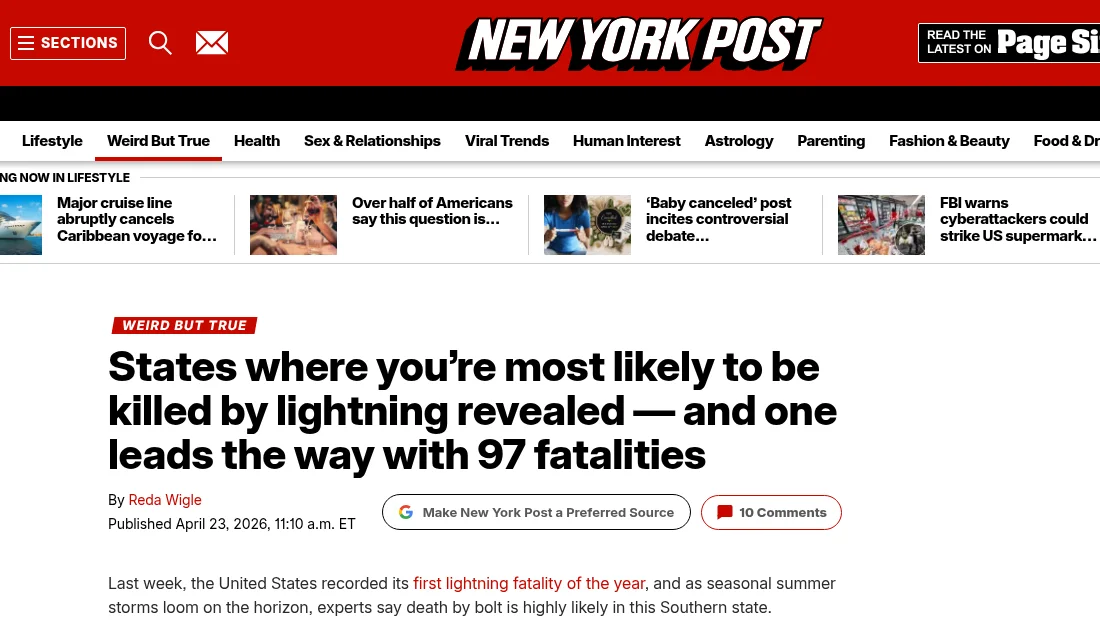
Client coverage in



Plans and pricing
Two plans, both month to month. The price you see is the price you pay.
Ten placements a month across several pages.
Twenty placements a month for multi-market teams.
Pay by card or crypto at checkout. Not sure which plan fits? Book a call and we'll tell you. Agencies can resell the same work through white-label link building.
How it works
You send the website. We do the research, writing and pitching.
We agree with you which pages on your site need more authority.
National news for reach and trust, trade titles your buyers read for relevance.
Data stories tend to land national news. Expert comments win the trade press.
A site needs real readers, and the article must show in Google, before the link counts.
Proof
Real articles from client campaigns and from our own data studies.
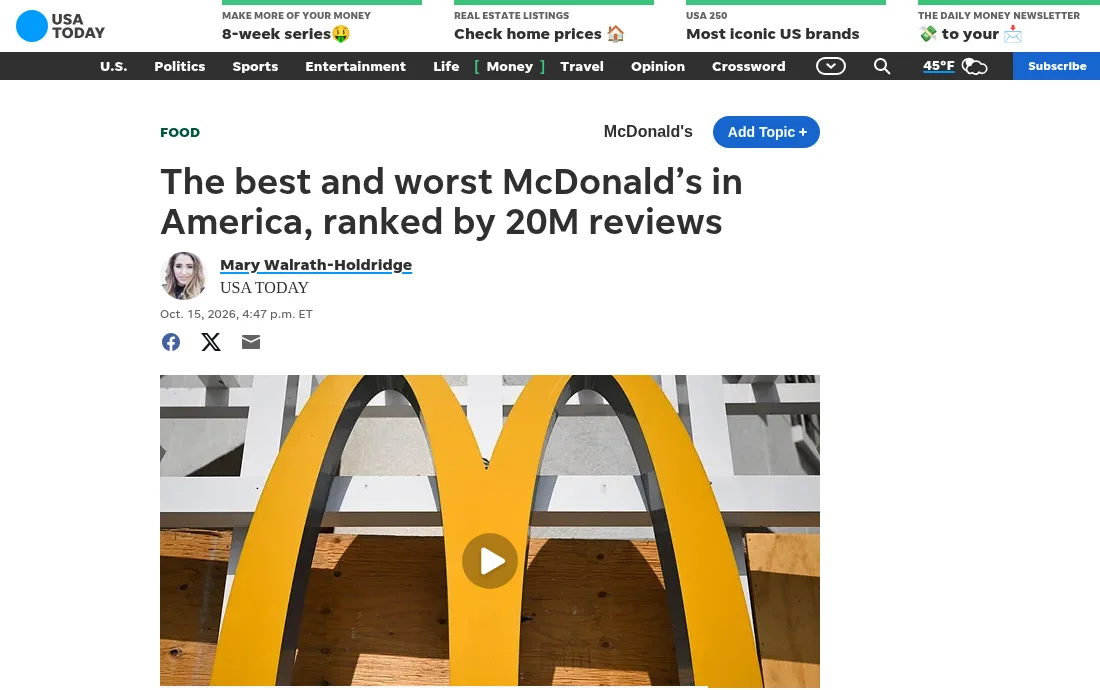
"The best and worst McDonald's in America, ranked by 20M reviews." Our own data study, October 2026.
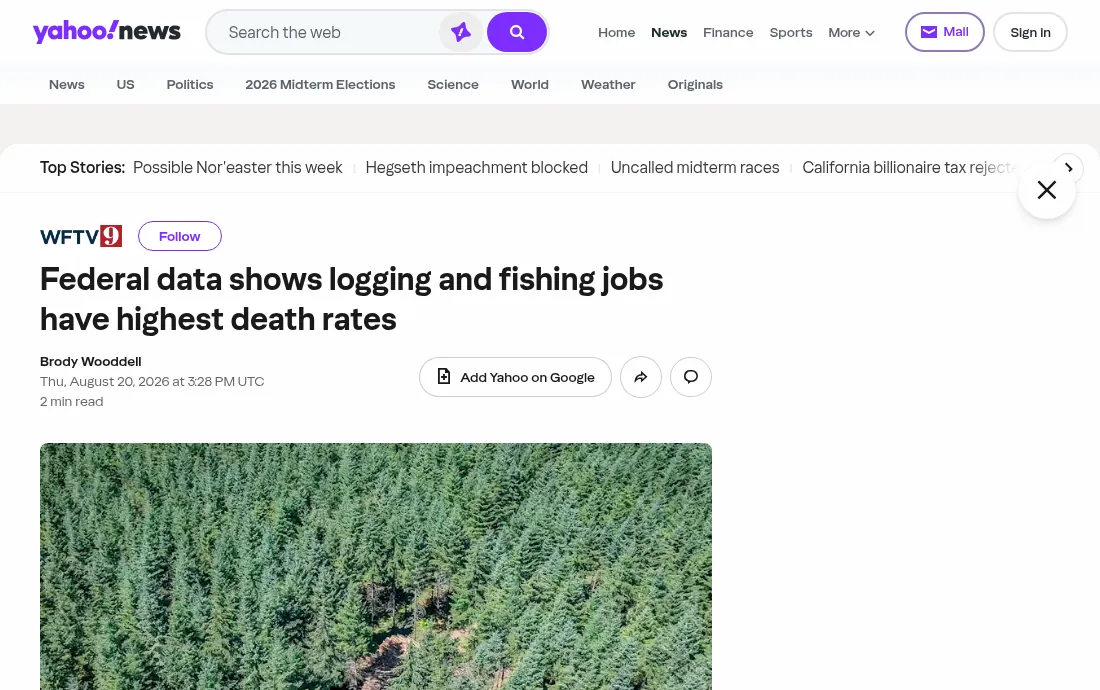
"Federal data shows logging and fishing jobs have highest death rates." An analysis we built for a client, August 2026.
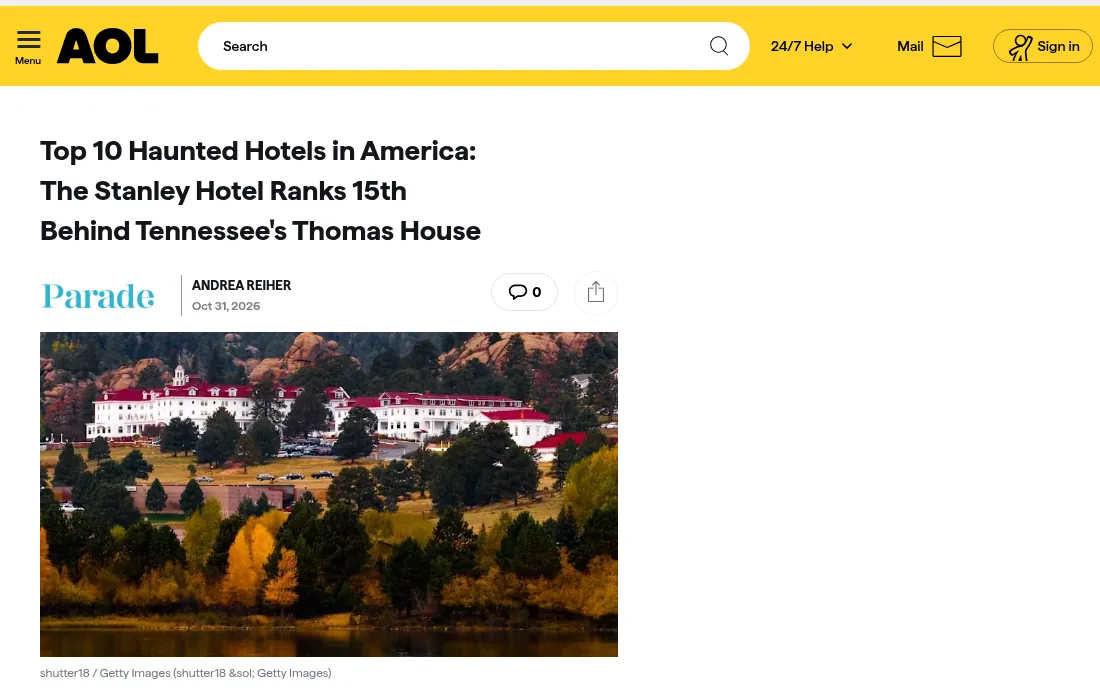
"Top 10 Haunted Hotels in America." A ranking we built for a client, October 2026.
The outreach angles were the difference. We were not just asking for a backlink; there was a reason for an editor to care.
Most sellers sort high authority links by a score: Domain Authority (DA) from Moz, or Domain Rating (DR) from Ahrefs. The score is a quick first filter. It can't tell you whether the site has readers, whether Google shows the article, or whether the site sells links to anyone who pays.
We earn links from publications with strong scores and real audiences, by giving their journalists a story they want to run. Every link goes in your report with its scores and its traffic.
A site has high authority when lots of other trusted sites link to it. SEO tools turn that into a score from 0 to 100. The scores run on a curve: going from 70 to 80 takes far more links than going from 20 to 30, which is why high scores are rare and why sellers lead with them.
Google doesn't use the tool scores. It has its own measure of link strength, PageRank, and has said it doesn't use a domain authority score. The tools try to predict how strong a site's links are, and they do that well enough to be a useful first filter. Our guide to what SEO backlinks are explains how Google counts links.
| Score | Made by | What it's based on |
|---|---|---|
| Domain Authority (DA) | Moz | Mostly the links pointing to a site: how many sites, and how strong they are. |
| Domain Rating (DR) | Ahrefs | Only the sites that link to a site, and how strong they are. |
| Authority Score | Semrush | Links, plus the site's search traffic and signs of spam. |
| PageRank (PR) | Google's own link score. The public 0 to 10 version was removed in 2016, so a "PR9" label today can't be checked. |
A score can be inherited from an old domain, pumped up with links bought for the purpose, or earned in a market that has nothing to do with yours. A site can also keep a high score for years after it starts selling links. Five checks catch most of this:
The backlink quality checklist has the full list. It takes about five minutes a site.
A trade publication your buyers read, with a score in the 40s, often does more for you than a general site scoring 90. The trade title's pages rank for searches in your field, its readers are your customers, and a mention there makes sense in context.
A huge general site covers every subject, so a link from it says less about yours. That's why most campaigns mix the two: national news for reach and trust, trade titles for relevance. What makes any single link good is covered in editorial backlinks.
Trusted sites link out when they have a reason to: a source for a story, an expert to quote, a figure worth citing. You can't order that. You can give a journalist something they want to use, in one of three ways.
Two examples. Our own study ranking McDonald's locations by 20 million Google reviews was covered by USA Today, which linked to us. A ranking we built for a client, on the states where you're most likely to be killed by lightning, ran in the New York Post. More on each route: data-led digital PR, expert commentary and reactive PR.
Search for high DA backlinks and you'll find offers like these. Most of them sell the score, not the trust behind it.
| What's sold | How it works | The problem |
|---|---|---|
| High DA PBN links | Links from a network of sites one owner runs to sell links. | Google's spam systems are built to find networks. When one is caught, its links stop counting. |
| Guest posts from a DA list | You pay to publish an article on a site picked from a price list. | A site that sells to anyone isn't trusted the way its score suggests. Google expects paid links to be marked as paid, and marked links don't help rankings. |
| "High PR" links | Links sold with a PageRank number, such as PR9. | Google removed the public PageRank score in 2016, so the number can't be checked. |
| Expired high DA domains | An old domain bought for its links, then redirected to your site or filled with posts that link to you. | Google's spam policies cover buying expired domains to game search results. |
| Coverage from digital PR | A journalist covers your story and links to you. | It costs more: $400 to $1,500 a link at typical market rates. |
How to spot a link network is covered in no-PBN link building, and buy backlinks walks through the rest of the market.
Every link goes into your report as soon as the article is live. We don't promise a minimum score for each link, because editors decide whether and how to link. The report shows what was earned.
For each link you get:
Most months mix national news with trade titles, and the report shows that mix.
Google's AI Overviews, and assistants like ChatGPT when they search the web, tend to cite pages that already rank and sources they already trust. Coverage on respected publications helps with both: the links help your pages rank, and the articles put your brand on the sites those answers draw from.
Nobody can promise an AI citation. More in how to build links for AI search.
Commitments
Questions
Something we haven't covered? Book a call, or email info@seobacklinks.com and we usually reply within one business day.
They are links from well-known sites that many other trusted sites link to, such as national news publications. SEO tools score this from 0 to 100: Moz calls its score Domain Authority (DA) and Ahrefs calls its score Domain Rating (DR).
Give a journalist at that site a reason to mention you: a new data story, an expert comment, or a quick take on the news. Our plans do this for you, from $6,000 a month for at least 10 links.
Not safely. A site that sells links to anyone isn't trusted the way its score suggests, and Google treats paid links as spam unless they're marked as paid. What you can pay for is the work that gets journalists to cover you.
There's no official line, but sellers often call 50 or 60 and above high. The number alone tells you little: a trade site your buyers read can do more for you than a general site with a higher score.
Neither is Google's own measure, so we check both. DR reacts faster to new links, while DA moves more slowly. A big gap between the two often means the links were built quickly, which is worth a closer look.
PR means PageRank, the 0 to 10 score Google used to show publicly. Google removed the public score in 2016, so a link sold as "PR9" today carries a number nobody can check.
Yes. DA and DR are built from links, so links from strong sites raise them over time. There's no fixed gain per link: the scores run on a curve, so each point is harder to get the higher you go.
No. A PBN is a network of sites one owner runs to sell links, often with scores pumped up by linking to each other. Google's spam systems are built to find them, and when a network is caught its links stop counting.
Not from real publications, because editors decide what they run. A seller who promises a score for every link is usually picking from a list of sites that sell links. We commit to a number of links a month and show each site's scores in the report.
Our plans are $6,000 a month for at least 10 links, or $9,900 a month for at least 20. Across the market, digital PR links usually cost $400 to $1,500 each.
Big platforms and national news sites, such as Google, YouTube, Wikipedia and major newspapers. News publications are the realistic target, because they link to their sources when they cover a story.
They can help indirectly. AI answers in Google and ChatGPT tend to cite pages that already rank and sources they trust, and coverage helps with both. Nobody can promise an AI citation.
Start here
Send your website and the pages you want to rank. We'll tell you which plan fits.