
AI search guide
Link building for AI search and generative engine optimization
Building links for AI search, often called generative engine optimization (GEO), means earning coverage on the sites that Google's AI Overviews, ChatGPT and Perplexity draw on, so your pages rank and your brand is named where answers come from. This guide explains how those tools pick sources, how a citation differs from a link, and the steps that help with both.
Updated
An AI answer squeezes a page of search results into a few paragraphs with a handful of sources. Which sources make it depends largely on signals from ordinary search: whether a page can be found, whether the site is trusted on the topic, and who links to it. The sites AI answers quote are mostly sites search engines already trust.
So link building didn't end when AI answers arrived. It changed shape. The links that matter most now are the ones that put your brand on trusted news and reference sites, because those sites make up much of what AI tools search, and much of what they learned from.
How AI tools choose their sources
Google's AI Overviews and AI Mode work from Google's own index. Google says a page must be indexed and able to show in normal results with a snippet to appear as a link in them, with no extra technical steps. Both may also run several related searches behind the scenes and gather sources from all of them. A page that can't rank in normal search has little chance of being cited.
ChatGPT and Copilot can search the web while they answer, and Perplexity runs its own search. All of them tend to favor established sources.
Behind the search sits what the model learned in training. Nobody outside the AI companies knows exactly what went into it, but large web collections include a lot of news and reference publishing. A brand that trusted publications cover often is more likely to be tied to its topic than a brand that only appears on its own website.
That answers a common question: AI models don't count backlinks the way Google's ranking does. Links matter to them indirectly, by deciding which pages rank in the search results AI tools pull from, and by spreading your brand across the sites they learn from.
Links and AI citations are different things
A citation is an AI tool naming or quoting you in an answer, sometimes with a link to your page. A backlink is a link from another website to yours. They work differently, and you build them through the same work.
| Backlink | AI citation | |
|---|---|---|
| What it is | A link from another site to yours. | Your brand or page named in an AI answer. |
| Who decides | The editor or site owner. | The AI tool, answer by answer. |
| Can you check it? | Yes. It stays on the page until someone removes it. | Only by asking the question. Answers change from day to day and person to person. |
| What it does | Helps your pages rank, and brings readers. | Puts your brand in front of people who asked, and may bring a visit. |
| How you earn it | Coverage on sites people read. | Coverage on sites the tools trust, plus pages that rank. |
A mention without a link seems to count for more in AI answers than in ordinary rankings. An expert quoted in a big publication can turn up in an answer even when the article never linked out. Still, the link is the stronger form of the same mention, and it helps your pages rank in the searches AI answers come from. Treat brand mentions and backlinks as one piece of work with two results, as digital PR backlinks explains.
Want editorial links earned for you? Plans start at $6,000 a month for at least ten.
View pricingFind the sites AI answers cite in your field
Which sites get cited depends on the field and on the tool, so check your own. Write down 20 to 30 questions your buyers ask. Run them in ChatGPT, Perplexity and Google's AI Mode, and note every site each answer cites. After a few rounds the same names keep coming back, and they usually fall into a few types:
| Type of site cited | How to get your brand there |
|---|---|
| National news and magazines | Data stories and expert comment that journalists want to use. |
| Trade publications in your field | Expert comment, and guest articles where the publication accepts them unpaid. |
| Review and comparison sites | Ask real customers for reviews, and keep your listings accurate. |
| Forums such as Reddit | Answer questions openly, as yourself. Fake accounts get found and banned. |
| Wikipedia | Only through coverage in independent sources. Don't write or edit your own company's page. |
| Competitors' and vendors' blogs | Publish a better answer on your own site, ideally with figures nobody else has. |
News and trade publications are where links come in. They are the sites a PR campaign can reach, and they tend to carry weight in ordinary search too.
Why digital PR fits AI search
Digital PR earns coverage on the news sites that sit high in search results. One placement usually brings several things at once: a link, a mention of your brand, often a quote from a named person, and sometimes copies of the story on sister sites.
Two routes work especially well. Data-led campaigns create figures that journalists repeat and credit, and a short, clear finding is easy for any later summary to repeat as well. Expert commentary ties a named person to your brand and your subject, so the connection shows up across many sites.
Our own McDonald's study ranked locations by 20 million Google reviews. Its best and worst lists ran in USA Today, The Independent and on WTOK, a Mississippi TV station.
Practical steps to build links for AI search
These steps favor the sources AI tools already trust, and pages shaped the way those tools quote them:
- Publish original data: with findings that still make sense in one sentence.
- Name your experts: the same people, with the same job titles, on your key pages and in your press coverage.
- Earn links from national news and trade titles: the sites AI tools lean on.
- Describe your brand the same way everywhere: one name and one short description on your site, profiles and listings.
- Answer the question first: on pages you want cited, put the answer in the first paragraph.
- Make sure Google can index the page: AI Overviews and AI Mode only link to pages that can appear in normal results.
- Don't block the search tools you want: check your robots.txt file lets in Googlebot, Bingbot and OAI-SearchBot, which ChatGPT uses for search.
For the links themselves, the backlink quality checklist shows which sites are worth it.
AI link building: using ChatGPT to help
AI tools are useful helpers in link building, and poor replacements for it.
Good uses:
- Brainstorming story ideas and headlines to test.
- Summarizing a large dataset, then checking every figure by hand.
- Sorting a long list of linking sites into types.
- Tightening a pitch you've already written.
Bad uses:
- Sending hundreds of AI-written pitches. Journalists spot them and stop opening your emails.
- Mass-producing articles for guest posts or link sites. Google's spam rules cover content made at scale to game rankings.
- Letting the tool supply statistics or journalist names. It can invent both, and one wrong figure in print damages trust.
- Making up experts. Journalists check, and a fake source ends the relationship.
The judgment calls, such as which story is news, which journalist covers it and whether a figure holds up, still need a person.
How to measure AI visibility
Measurement is still rough, but workable:
- A fixed set of questions: run the same questions each month in ChatGPT, Perplexity, AI Overviews and AI Mode, and log which sources each answer cites.
- Visits from AI tools: in Google Analytics, watch referral visits from chatgpt.com, perplexity.ai, gemini.google.com and copilot.microsoft.com.
- Brand searches: in Search Console, watch searches for your brand name. People who see you in an answer often search for you next.
Search Console counts clicks from AI Overviews and AI Mode inside its normal totals, with no separate filter, so the set of questions is your only direct view of citations.
Expect the link side to move first: coverage lands, then your pages gain authority, and citations in search-based answers may follow. Any change in what a model knows without searching builds slowly, if at all. Nobody can promise a citation, so judge the work on the coverage and links it brings.
Proof
Coverage that carries a finding or a name.
Real articles from our own studies and client campaigns. Each one credits a brand with a figure or an expert view, on a publication people already trust.
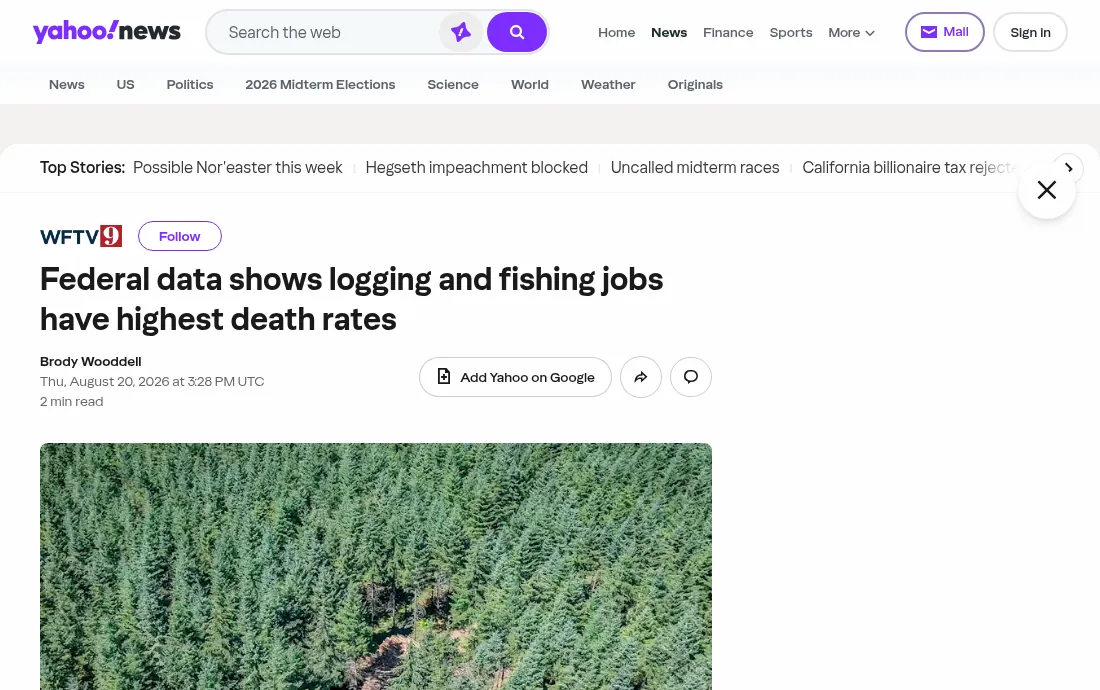
"Federal data shows logging and fishing jobs have highest death rates." An analysis we built for a client, August 2026.
- Daily MailAvoid a Lapland letdown! Experts reveal how to beat the stress of a Christmas tripClient expert commentary, October 2026
- news.com.auSydney's best trick-or-treating spots revealedOur own study, October 2026
- NZ HeraldNorthland's beautiful sandy beaches rank among New Zealand's bestOur own study, October 2026
It felt closer to digital PR than link buying. Fewer links, better environments, and no pressure to accept placements that did not make sense.
Questions
Questions about links and AI search.
Something we haven't covered? Book a call, or email info@seobacklinks.com and we usually reply within one business day.
Do backlinks matter for AI models and assistants?
Yes, indirectly. AI models don't count links the way Google's ranking does, but AI search tools pull answers from search results, and links help decide which pages rank there. Coverage on trusted sites also spreads your brand across the material those tools draw on.
How do I build links for AI search?
The same way you build links that last: earn coverage on news and trade sites with data stories and expert comment. Then make sure the pages you want cited can be indexed and answer the question in their first paragraph.
What is citation building for AI search?
It means getting your brand named, and ideally linked, on the sites AI tools cite for your topic. It's different from citations in local SEO, which are directory listings of a business's name, address and phone number.
What is the difference between link building and AI citation building?
Link building earns links from other sites to yours, which help your pages rank. AI citation building aims to get your brand named in AI answers. The work overlaps heavily, because AI tools mostly cite pages that rank and brands that trusted sites cover.
Can I use traditional link building for AI search, or do I need a different approach?
Mostly the same approach, with a different emphasis. Mentions without a link count for more, short quotable figures matter, and describing your brand the same way everywhere helps. Links from real publications still do most of the work.
How do I use ChatGPT for link building?
Use it for the groundwork: story ideas, sorting lists of sites and tightening pitches you wrote. Don't use it to send mass pitches, write articles for link sites, or supply statistics and names, because it can invent them.
Which websites do AI models cite most?
It depends on the field and the tool, and it changes often. Published studies of AI answers often find Wikipedia, Reddit, YouTube and large news sites near the top. Run your own buyers' questions to see the list for your field.
Can I pay to appear in ChatGPT or AI Overviews?
You can buy labeled ads, but not the answer's own sources. Google shows ads in and around AI Overviews and AI Mode, and ChatGPT shows ads to some users. The cited sources come from what the tool already trusts.
How fast can coverage show up in AI answers?
Tools that search the live web, such as Perplexity, AI Overviews and AI Mode, can cite new coverage within days. Any effect on a model's built-in knowledge is slower and harder to see, which is why steady coverage beats one big story.
Can anyone promise my brand will appear in AI answers?
No. Each tool decides its sources answer by answer, and the same question can get different sources on different days. What can be delivered is the coverage and the links, and that's what we commit to.
Start here
Build the coverage AI answers draw on.
Send your website and the questions you'd like your brand to show up for. We'll suggest the stories we'd start with, and tell you which plan fits.